
After years of being sequestered by the pandemic, some intrepid travellers are planning to settle their score with the novel coronavirus. With fewer or no travel curbs, they are eager to get back on the road, again. Hotels and tour operators, too, are eager to shed excess Covid baggage. And this year's Diwali promises to add that extra layer sparkle with the introduction of new flights.

A steady climb in volumes has helped the company double its market share in the segment to 5 per cent in the first six months of the financial year from the year-ago period and it has now set its sights on a 10 per cent share in the next two years.
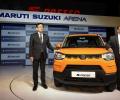
The country's largest carmaker Maruti Suzuki India will not "walk away" and fight to get back to 50 per cent market share in the domestic passenger vehicle segment, according to company Chairman R C Bhargava. The auto major, which is commemorating 40 years of operations, has seen its market share drop to 43.38 per cent in FY22 from a peak of 51.21 per cent in FY19. In order to get back its dominant leadership, the company plans to drive in models catering to both urban and smaller cities and rural areas.

The numbers in India may not be as big but the opportunity for serious growth is all there.

It claims to be ahead of its competitors in the segment.

'Since 2017, the chief minister and the RSS seem to have come closer.' 'This relationship's warmth is more from the RSS's side.'

The Reserve Bank of India's (RBI's) move to ban Mastercard from issuing new cards for not complying with the local data storage guidelines may hit five private banks, a non-bank lender, and a major card-issuing company. The impact is expected to be felt for a few months as these players transition to other card networks. According to Nomura Research, RBL Bank, YES Bank, and Bajaj Finserv are the ones most impacted by the ban as all their credit card schemes are allied to Mastercard. Among others, IndusInd Bank, Axis Bank and ICICI Bank have 35-40 per cent of their credit card schemes tied to Mastercard, the report said.
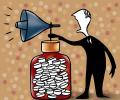
Bulk of the medicine sales in the $22-24 billion domestic pharma market happens through offline retail chemists. With the entry of online pharmacies, this space has started to witness a shake-up. Sample this: Dawaa Dost, a Rajasthan based digital health start-up, generates medicine orders from 'kirana' stores and women self-help groups (SHGs) that operate in villages, and then service these orders through its affiliated network of pharmacies. Biddano, another health-tech start-up, has a platform that acts as an aggregator for neighbourhood chemist shops.

The company is currently selling an average 2,000 units each month.

With only a handful of models by a few manufacturers including Tata Nexon, MG ZS, Hyundai Kona, among others, the segment has remained under tapped.
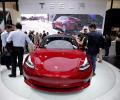
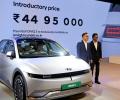
'The semiconductor supply is constantly improving, with visible green-shoots in the situation as compared to earlier part of last year'

Auto experts from CarJasoos answer all your questions related to buying, selling or maintenance of new cars.
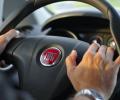
Despite the romance around the car and its early models, Fiat in India will also be remembered as a brand that frittered away the first mover advantage, says Shally Seth Mohile.

Industry watchers attribute a lot of the current successes of the $6 billion Hero Group to how B M Munjal planned and executed succession in HeroCorp, balancing the interests of other family-owned businesses.

Earlier in May, Ford India announced that it had dropped its plans to make electric vehicles (EVs) in India, which it intended to export, under the production-linked incentive scheme (PLI). Ford was among 20 companies that had signed a Champion OEM Incentive Scheme under the PLI project with the government in February this year. The decision comes as a blow for the 4,000-odd employees at Ford India's Maraimalai Nagar plant near Chennai and in Sanand, Gujarat. In September last year, the company had announced that it would exit the India market, which it had entered in 1995 through an on-again, off-again joint venture with Mahindra & Mahindra (they split in 1998, signed a JV in 2019 and split again in December 2020), retailing petrol and diesel brands such as the EcoSport, Figo, Aspire, and Endeavour.

Smart positioning, continued communication and a global design language have played a big role, say experts

Creating a market for premium coffee is a challenge.
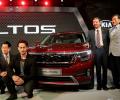
What explains India's love affair with SUVs? They are not exactly "value for money" -- the watchword for brands across segments -- nor always practical. Is it for the badge value? Or the butch imagery associated with SUVs? Maybe both, says Alokananda Chakraborty.

The list of corporations publishing biographies has lengthened steadily as companies have realised the effectiveness of story telling as a brand building tool. Kanika Datta investigates the rising trend.

Ahead of the peak festive season, India's passenger vehicle makers are staring at a cumulative order backlog of nearly 500,000 units as chip shortage continues to cripple production. The crisis is forcing companies to change their production plans frequently and take a call on the variants they can manufacture based on the availability of semiconductors. The booking numbers are not a true reflection of demand, said manufacturers.

Moving over 520,000 employees to a digital work model is no mean feat. Having done so, Tata Consultancy Services (TCS) is taking these learnings to help clients digitise their work models. Swiss Re is one such client. For the global information technology services firm with a headcount of 528,748 as of end-September, the shift to a single human resource (HR) platform started a few months before the pandemic started, when TCS moved its HR solutions to Microsoft's platform. Siva Ganesan, global head, Microsoft business unit, TCS, still remembers the early days when TCS embarked upon a move from an existing software platform to a digital medium for communications on a Microsoft Office platform.

Adding oomph to an ageing brand?. When the first wrinkles appear, the search for the fountain of youth must begin!

Sporting a price tag of Rs 39.5 lakh, Jaguar XE is the most affordable Jaguar in the Indian market. Photographs: Rajesh Karkera and Hitesh Harisinghani/Rediff.com at the Auto Expo.
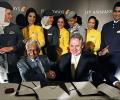
A financial turnaround with the Etihad partnership and debt restructuring has not fully materialised.

Passenger vehicle majors like Hyundai, Tata Motors, M&M, Toyota Kirloskar and Honda on Wednesday reported growth in domestic sales in August riding on festive sentiments, although market leader Maruti Suzuki posted a decline amid a semiconductor shortage affecting the industry. The country's largest carmaker Maruti Suzuki India Ltd (MSIL) reported domestic sales at 110,080 units, as compared to 116,704 units in the same month last year, down 6 per cent. "Sales volume of the company in August 2021 was affected due to electronic components shortage.

Tata Teleservices' GSM innings is likely to be a tough one despite its innovative offerings and tie-up with the Japanese market leader, NTT DOCOMO.

This e-series funding round also makes OYO the most valued hospitality company in the country, ahead of the Tata group's Indian Hotels Company, which owns the Taj brand of hotels, and EIH, which owns the Oberoi brand of hotels.

HR Guru Mayank Rautela offers practical advice.

HR Guru Mayank Rautela offers practical advice.

With cash shortage and plans going awry, the AirAsia owner is looking to cash out of the venture he built with Ratan Tata in 2013.

JLR, the maker of Jaguar F-Type and Range Rover Evoque, was a jewel in the crown of Tata Motors till two years back. But, it has been struggling because of the pending Brexit, a sharp contraction in sales in China, a shift in consumer preference from diesel to gasoline in Europe, higher taxes on diesel vehicles, and tightening regulations.

Top companies across sectors -- automobile maker Maruti Suzuki, consumer electronics giant Samsung to IT giant Infosys -- have reopened factories and offices as India took its first steps towards resuming economic activity after weeks under a near-total coronavirus lockdown.

Chinese sponsorship became a bone of contention after the BCCI declared it would review the deals following the violent clashes between the armies of both the countries in eastern Ladakh.

Wherever you go, whether it's Malad or the Maldives, people. want. to. take. pictures. Of themselves. Relentlessly, repeatedly, recklessly.
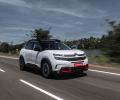
Making a debut in India with an SUV, Citroen's products in the next couple of years will clearly chart and define its destiny in what has become both a vibrant but also a daunting market for foreign entrants, says Pavan Lall.
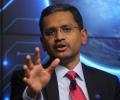
In March this year, when Tata Consultancy Services (TCS) unveiled a new brand statement of "Building on Belief", many wondered if it was the right strategy. When things are uncertain, wouldn't a brand statement such as "Experience Certainty" have been better? But for Rajesh Gopinathan, CEO & MD, TCS, it was all about the way the company was looking at business. As Gopinathan explained over a video call, "Today, we have over 1,000 customers and 98 per cent of our business is repeat business; our relevance to customers should continue, and to increase.
Tata Motors is expected to sign the agreement to buy the two Ford-owned luxury marques, Jaguar and Land Rover in the next few days. Tatas are expected to pay $3 billion for the coveted brands. According to sources, Tata Motors, India's largest auto making company, has agreed to most of the clauses put forward by Ford and Unite (workers union of the two brands), including the condition that Tata Motors will not shift the manufacturing facilities of the two brands.

India's electric mobility goal, which has so far been riding on two wheels, is all set to graduate to four wheels. At least, the journey has begun. Hyundai Motor India said it would invest Rs 4,000 crore till 2028 to launch half-a-dozen electric vehicles (EVs) in India. It would eventually straddle premium and mass segments. The first of these - the electrified version of an internal combustion engine (ICE)-powered model - will go on sale as early as next year.
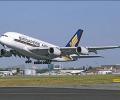
Phee Teik Yeoh, the recently anointed chief executive officer of the airline, speaks to Business Standard on his aim of changing the rule of the game in the aviation sector by redefining service and operational experience for travellers accustomed to mere functionality.
